Entering the Medical Field

by Jessica Gerwin, Drake HS

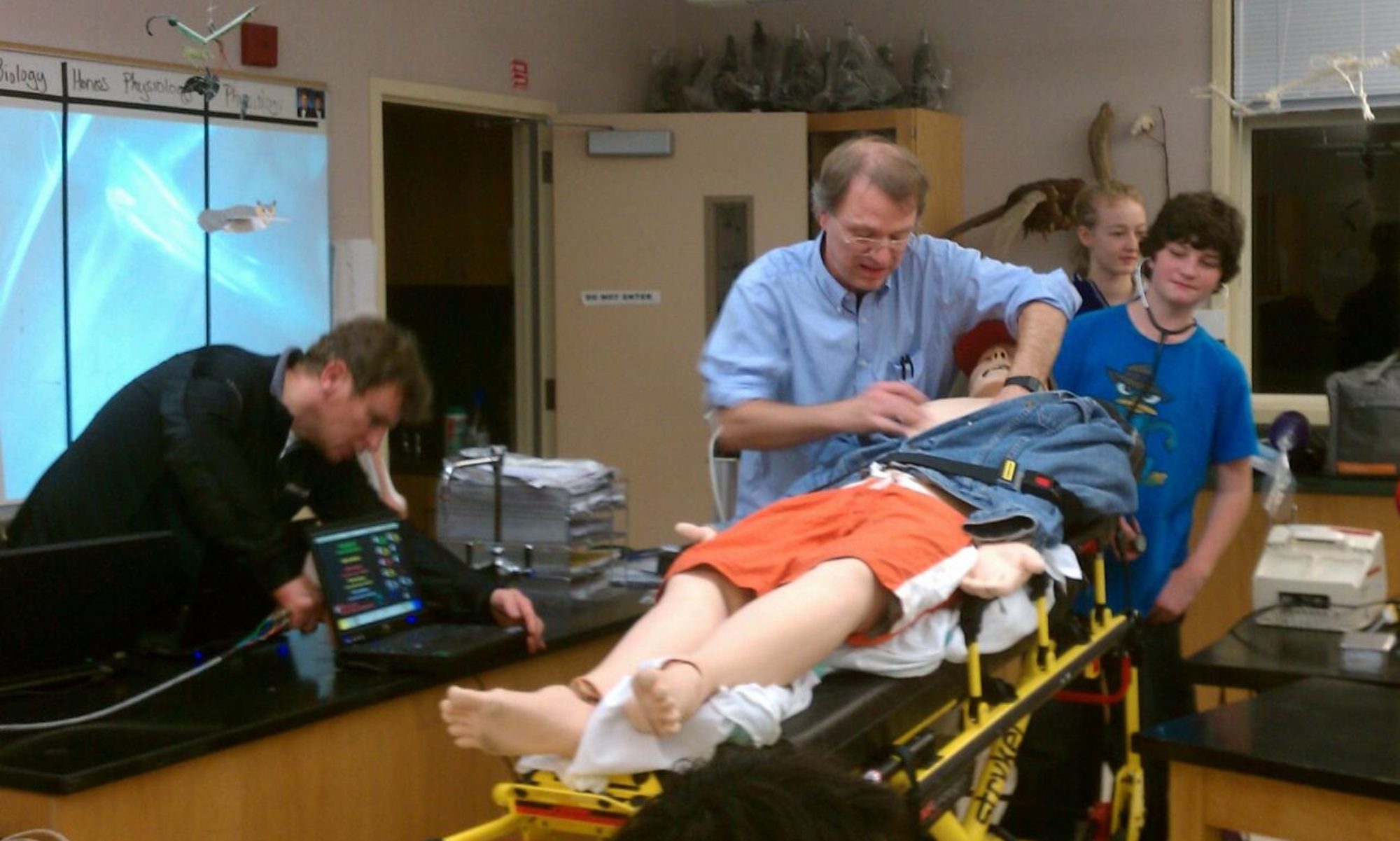
Dr. Art Wallace, who is a cardiac anesthesiologist and the Chief of Anesthesia Service at the San Francisco Veteran Affairs Medical Center (SF VAMC) will be presenting at the Marin Science Seminars this Wednesday. His presentation “Making Medicine Safer”, will explore the vital roles that drugs, devices and software play in modern medicine. I had the opportunity to interview Dr. Wallace and was given insight on how to enter into medical professions. Our interview is below.


  1. Your B.S. was in Engineering and Applied Sciences. Did you start off wanting to be an Engineer?  If so, what first sparked your interest in the field of medicine?
    1. I always wanted to be a doctor. My mother died when I was a young child and this experience focused my interest in medicine with a goal of preventing this problem in others.
    2. I started off in college with a goal to go to medical school but with an interest in physics and engineering as well. Electrical engineering appealed to me, so I majored in Engineering and Applied Science with a focus on electrical and biomedical engineering.
    3. I am fascinated by how stuff works.


  1. What kept you motivated to go through the intensive level of schooling needed to become an anesthesiologist?
    1. I was fascinated by medicine and research.
    2. In medical school, I my girlfriend developed cancer. This second experience with terminal illness drove me even harder to try to find therapies to help patients.
    3. I was driven to invent therapies that save lives.


  1. What makes you excited about going to work everyday?
    1. Providing the best care possible for patients.
    2. Creating the future of medical care. I focus on inventing therapies. Testing therapies. Making therapies better.


  1. What attributes, both teachable and non-teachable, do teenagers need to have to start pursuing a career in medicine?
    1. Fascination with science, medicine, people.
    2. Caring about people.
    3. Desire to understand how stuff works.


  1. What sort of local opportunities should teenagers be looking for?
    1. Exposure to science.
    2. Exposure to medical care – volunteer in a hospital.

  1. Do you feel that teenagers today underestimate what it takes to become a successful?
    1. Teenagers need to realize that it takes a  long time to accomplish something significant. I worked for almost 30 years to become a doctor. Once I was a physician, it took 10 more years to get good at it.
    2. One can master a video game in a week (less than 168 hours). Becoming a doctor takes a minimum of 12 years of work 100 hours a week. That is more than 60,000 hours of work to become a doctor.

  1. What message would you like to give teenagers today about joining the medical field?
    1. It is great. I love it. I can’t imagine a better thing to do with my life.
    2. It takes a lot of work.
    3. Make sure it is something that fascinates you.
    4. There is enormous joy in providing care to patients. They are relieved. They don’t die. They are no longer in pain. It is a tremendous experience to be able to help a patient.
    5. It is a tremendous experience to invent a therapy that prevents morbidity and mortality.


To learn more about recent advances and methodologies in modern medicine, check out our next seminar on October 23rd  featuring Dr. Art Wallace speaking on “Making Medicine Safer with Drugs, Devices, Software and More” The event will take place at Terra Linda High School Room 207 at 7:30 pm. To download the Fall flyer, click here.

Click on the link below for more information about Dr. Wallace

Image credits

-Jessica Gerwin

The Process Behind Medical Innovations Revealed

by Claire Watry, Terra Linda HS

This week Dr. Art Wallace returns to the Marin Science Seminar to present “Making Medicine Safer with Drugs, Devices, Software & More”. Dr. Wallace is a cardiac anesthesiologist at the San Francisco Veterans Affairs Medical Center (SF VAMC) and the Chief of the Anesthesia Service. He is also a professor of Anesthesiology and Perioperative Care at the University of California, San Francisco. Dr. Wallace provides clinical anesthesia care to patients at the SF VAMC and has a laboratory that works on reducing perioperative risk. He has compiled an impressive list of innovative theories for perioperative cardiac patients. Dr. Wallace will explain the process of developing a new drug, device, or software and answer your burning questions: How is a drug or device developed? How is a new product tested? How is it determined whether the therapy is successful or not?  How do new technology and therapies change medical care? For a sneak peek preview of his presentation, check out part of my interview with Dr. Wallace below. 

What is the process of researching, developing, and implementing a new drug, device, or software?

a. The first step is to identify a problem and then identify the likely etiologic factors (what causes the problem). When we looked at patients having heart attacks around the time of surgery we first did an epidemiologic study to find out how often they died. We then put holter monitors (small portable ECG monitors) on the patients. We found that they had myocardial ischemia (not enough blood supply to the heart muscle).

b. The next step is to test likely therapies. We tested 20 different drugs to find ones that would prevent myocardial ischemia. We found four that worked.

c. The next step is to implement the programs. We implemented programs in our hospital to use those medications. Those programs decreased the mortality of patients about 35%.

d. The next step is to disseminate the program to other hospitals. We helped more than  1000 other hospitals implement the programs and they found similar reductions in mortality.

e. For devices the approaches are similar – 1) Identify a problem. 2) Find possible causes. 3) See if you can create a device to eliminate the problem. 4) Test the device to see  if it reduces or eliminates the problem.


How long does the process typically take?

The development of perioperative cardiac risk reduction takes many years and many billions of dollars. It depends when you start the clock. When did you identify the problem? When did you find a likely solution? When did you prove it works? When did you get others to use it? Science takes a long time. Once you find a therapy, it takes the average doctor 17 years to adopt it.

When asked about what serious health issues he believes can be alleviated by the development of new technology, Dr. Wallace answered that even with new technological advances, prevention is key because “many of the health care problems we face are related to behaviors”. Dr. Wallace cited using birth control and HIV prevention, not smoking, taking illegal drugs, becoming obese or drinking excessively, and exercising regularly as prime examples of how proper education and behavior alterations can dramatically reduce health problems. He maintained that “it is vastly easier and more effective to avoid having a problem than to attempt to fix it” and mentioned computerized reminders to eat reasonably, to avoid drugs, cigarettes, and excessive alcohol, and to exercise as an effective way to avoid having a problem.

Dr. Wallace stressed that even with advanced technology “developing some miracle drug or therapy for a disease is really, really hard. Avoiding getting the disease in the first place is vastly easier and cheaper. Literacy, flush toilets and sewers, washing your hands, chlorine and fluoride in drinking water, refrigerators, pasteurization, electricity, seat belts, and social security did vastly more for people than medicine.”

Learn more about the development of new medical therapies at Making Medicine Safer with Drugs, Devices, Software & More” with Dr. Art Wallace M.D. Ph. D. on Wednesday, October 23rd, 2013, 7:30 – 8:30 pm, Terra Linda High School, San Rafael, Room 207

http://www.marinscienceseminar.com/speakers/awallace.html

Claire Watry

Why do Cancer Cells Grow Forever and Can we Stop Them? Check out the teaser vid!

Check out this teaser video for Wednesday’s science seminar about battling cancer cells with Bradley Stohr MD PhD of UCSF. Video by MSS intern Josh Leung.


Why do Cancer Cells Grow Forever and Can we Stop Them? from Marin Science Seminar on Vimeo.
April 17th, 2013
Unlike normal cells, cancer cells can keep proliferating forever. This “immortality” allows cancer to spread through the body, causing destruction and often death. In this seminar, Dr. Stohr will discuss how cancer cells become immortal and how we might be able to treat cancer by targeting their immortality.

Brad Stohr MD/PhD is an Assistant Professor in the Department of Pathology at UCSF. His laboratory studies telomeres and telomerase in human cancer. In addition, he serves as an attending physician on the autopsy service.

Sinkholes in Space: Black Holes!

by Sandra Ning, Terra Linda HS    

 The first thing young students learn about space in their science classes is that it is huge. Earth becomes a speck in the solar system, infinitesimally small compared to the hulking gas giants orbiting ponderously outside of the asteroid belt, and infinitely distant from the roiling surface of the Sun. The solar system becomes a speck in the eye of the Milky Way galaxy: the heat of the Sun, too bright for humans to even look at, becomes mediocre in the face of thousands of other brighter, white-blue stars dotting the galaxy. Red dwarves overshadow even the largest planet, Jupiter. Even the harmonic system of the Sun and its orbiting planets is just one out of an incredible number of star clusters, constellations, distant planets and binary stars that comprise our galaxy.

      At the point when the solar system is only an afterthought on a distant arm of the Milky Way galaxy, and when the Milky Way becomes only one galaxy in an innumerable number within the universe, just about everyone begins to feel a little small.

      The good news is that there’s something smaller than little Earth and its inhabitants out in space. What might be considered bad news is that these innocuous little phenomena are the sucking, inescapable vortices of extreme gravitational pull that inevitably show up in every science-fiction novel: black holes.

An artist’s depiction of a black hole ‘devouring’ a star, as the process is often called.

      The smallest black holes are thought to be as small as a marble, or even an atom. Yet, packed within black holes, is compressed, super-dense matter that results in a gravitational field around it that is so strong not even light can escape its grasp— hence the black hole’s invisibility in front of the searching eyes of telescopes.

      In actuality, the sizes of black holes fall into three categories: small, stellar, and supermassive. The smallest are thought to have formed during the birth of the universe, and pack literally tons of matter into areas that are very small. The result is, of course, the extreme density and gravitational field that characterize black holes.
      “Stellar” black holes are about the size of a star, and can be up to twenty times the size of the Sun. These black holes form when very large stars collapse and create a supernova explosion. Gravity and atomic forces are always at odds around any object in space. The mass of the object creates a gravitational pull that acts on the object, but the object’s core atomic and nuclear energy are often stronger and allow the object to resist being crushed by its own gravity. At times, though, massive stars near the end of their lifespan don’t have enough thermonuclear force to resist the incredible force of gravity their mass gives them.

Cassiopeia A, a young supernova in the Milky Way.

      The star thus collapses under the force of gravity, and explodes in what is known as a supernova. Bits of the star’s gases go flying in this spectacular event, creating the fire-like nebulae observatories sometimes capture in photos. The rest of the collapsing star gets crushed by gravity into an area smaller than the massive star, but a mass similar to that of the massive star.
      “Supermassive” black holes are, true to their name, incredibly large black holes that are often over one million times the size of the Sun. These black holes are, for reasons currently still being studied, found at the center of spiral galaxies; supermassive black holes are thought to be created around the same time the surrounding galaxy was formed. The supermassive black hole believed to be at the center of the Milky Way galaxy, known as Sagittarius A*, is as big as four million suns.

A picture taken of the Milky Way. Sagittarius A* is at the bottom right of the bright white cloud in the center.

      Black holes are not as sinister or dangerous as science fiction novels tend to suggest. Consider the universe as one, large fabric of ‘space-time,’ as Einstein imagined it. The Sun creates a sizable depression in the fabric with its mass, and the dip in the fabric is the gravitational pull that the orbiting planets around the Sun experience. Now, holding the same mass but with the volume of a penny, black holes are far smaller and far denser than the Sun. Placing one into the fabric of space-time creates a narrow, but deep depression in the fabric. This accounts for the inescapable gravitational force a black hole has. But outside of its narrow tunnel of gravitational pull, the fabric appears normal. In other words, gravity around a black hole is normal. Gravity only becomes an inescapable pull when matter passes the surface of the black hole—this point of distance to the black hole is known as the event horizon. 

A diagram of the regions of a black hole in space-time.

      What matter gets sucked into is known as the singularity of a black hole. The center of a black hole, the singularity, is the point where matter is compressed into infinite density. The gravitational pull is infinite, and space-time ceases to exist meaningfully. All nebulae, planets, asteroids and stars that get pulled into the center of a black hole are crushed and exist in some timeless, spaceless, inescapable space purgatory.
      Or do they? Beyond the event horizon of a black hole, scientists don’t really know for sure what happens inside of a black hole. Any foray into a black hole would never make it back to Earth, and the pull black holes have on light make it impossible for telescopes to study a black hole directly; scientists deduce the existence of black holes mainly through examining the orbits of objects in space around it. Because of this inability to study black holes more closely, black holes remain very mysterious.
      Luckily for humankind, no black holes exist even close to Earth. It begins to feel a little luckier, sitting on the edge of the Milky Way galaxy, far away from the mysterious, roiling center where Sagittarius A* looms. But just considering their properties— a gravitational force that dominates even the speed of light, the spectacular origins of stellar black holes, and the curious centrality every supermassive black hole holds in each galaxy— it’s no wonder black holes capture the attention of scientists, authors, and the everyday student so easily. One might say that the study of black holes has at least metaphorically sucked in humankind.


Curious about black holes? Come join the Marin Science Seminar for Dr. Eliot Quataert’s presentation, ‘Black Holes: The Science Behind Science Fiction,’ tomorrow on Wednesday, March 13th. The Marin Science Seminar is located at Terra Linda High School, in room 207, from 7:30 to 8:30 p.m. Check us out on Facebook!

Sandra Ning

Check out the Marin Science Seminar Vimeo Channel

Check out Marin Science Seminar’s Vimeo channel!

Here’s MSS intern Josh Leung teaser video for this month’s Astronomy speaker series.


Astronomy and Astrophysics – March 2013 from Marin Science Seminar on Vimeo.
March 6th: NASA’s Fermi Gamma-ray Space Telescope (formerly known as GLAST) mission was launched into orbit on June 11, 2008. Its mission is to explore the most energetic and exotic objects in the cosmos: blazing galaxies, intense stellar explosions and super-massive black holes. Using experimental technologies developed by high energy particle physicists, Fermi’s astrophysical observations are being conducted by scientists world-wide. Unlike visible light, gamma rays detected by Fermi’s Large Area Telescope are so energetic that E = mc2 really matters! I will explain how Fermi uses matter and anti-matter pair production to track gamma rays to their cosmic locations, and will showcase recent exciting results from the mission

March 13: “I will begin by describing what black holes are (and what they are not!). I will then discuss how big black holes at the centers of galaxies are discovered, how they form, and how they give rise to some of the most remarkable and bizarre phenomena in the universe.”

March 27: One of the fundamental goals of astronomy and astrophysics is to understand how the Universe and its constituent galaxies, stars, and planets formed, how they evolved, and what their destiny will be. Dr. Barsony’s research is focussed on the formation of stars, brown dwarfs, free-floating planets, and planetary systems. The raw material is provided by the tenuous interstellar gas found in frigid clouds in our Galaxy. Since the present birthplaces of stars are hidden by interstellar dust mixed in with the gas, exploring the detailed mechanisms involved in star (and planetary system) formation requires observations at wavelengths whose passage is relatively unimpeded by the intervening dust: radio, millimeter, submillimeter, infrared, and X-ray wavelengths.

Fermi’s Eye on the Universe

by Sandra Ning, Terra Linda HS

An image of the Milky Way Galaxy and its surroundings, by Fermi.

    Since their invention, telescopes have allowed humans to examine closely, and in more detail, the universe around them. Advances in optic technology have brought humans closer to understanding the microscopic world around us and the far-away mysteries above us. Telescopes like Hubble and Chandra directed into space have been sending back dazzling pictures of nebulae, galaxies and star clusters that are as beautiful as they are scientifically fascinating. Fermi joins the research team with new equipment: gamma- ray sensing technology.
    Dr. Lynn Cominsky, who is the Department Chair of Physics and Astronomy at Sonoma State University, stopped to answer a couple of questions about her upcoming presentation on NASA’s Fermi Gamma-ray Space Telescope. She also lent her expertise to explaining the various, fascinating phenomena that occur out in the vast expanse of space.

1. What is the goal of the Fermi Gamma-ray Telescope mission?

From http://fermi.gsfc.nasa.gov/science/

Mission Objectives:

  • Explore the most extreme environments in the Universe, where nature harnesses energies far beyond anything possible on Earth.
  • Search for signs of new laws of physics and what composes the mysterious Dark Matter.
  • Explain how black holes accelerate immense jets of material to nearly light speed.
  • Help crack the mysteries of the stupendously powerful explosions known as gamma-ray bursts.
  • Answer long-standing questions across a broad range of topics, including solar flares, pulsars and the origin of cosmic rays.

2. What sorts of cosmic substances/structures is Fermi looking for?

     Most of the objects that Fermi sees are Active Galaxies which are aiming jets of gamma rays towards Earth (also known as blazars).
     Fermi is also discovering many pulsars, gamma-ray bursts, solar flares, supernova remnants and a handful of other objects, such as high-mass binaries, novae and extended objects like the “Fermi bubbles.”

Gamma-ray emissions around the Milky Way, detected by Fermi.

3. How are black holes formed? Why are supermassive ones, like Sagittarius A*, often (always?) at the center of galaxies?

     We don’t know exactly how the supermassive black holes are formed. Current research indicates a correlation in size between the size of the galactic bulge and its black hole’s mass. This would indicate that both the BH and the galaxy were formed together, when structure
began to form about a 500 million years after the Big Bang. Supermassive BHs are always at the centers of galaxies, as they are the most massive objects in the galaxy.

4. What about white holes and wormholes? Are they purely theoretical, 

     White holes and wormholes are theoretically allowed by Einstein’s theory of General Relativity. However, we know of no earthly-substance that could go into a BH and come out a WH without being destroyed.
or even fictional?

     White holes and wormholes are theoretically allowed by Einstein’s theory of General Relativity. However, we know of no earthly-substance that could go into a BH and come out a WH without being destroyed.

5. What are pulsars?

     Pulsars are rotating cores of dead stars – about the size of a large city. They are formed when regular, massive stars end their lives in supernova explosion. The outer layers of the star are ejected out, while the inner layers collapse down to form the pulsar. They also have very strong magnetic fields, which channel the particles and gamma-rays  in opposite directions.

6. And why are all of these high-energy phenomena of interest to researchers? How much (or perhaps, how little) do we know about these cosmic events that Fermi is looking for?

     Researchers are excited to study the most exotic and energetic phenomena in the Universe – we cannot duplicate the extreme conditions on Earth that naturally occur in space. Extreme magnetic fields, strong field gravity, high temperatures – all are of interest to scientists, as we can test our laws of physics at these extremes.

The Fermi satellite.

7. How does gamma-ray detection help Fermi in its mission? Is Fermi the only telescope with gamma-ray detection at the moment?

     Fermi is a gamma-ray telescope. So it must detect gamma rays in order to accomplish its mission. AGILE is a smaller telescope that was built and launched by the Italians, a few months before Fermi.

8. Aren’t gamma rays without mass? How exactly does Fermi detect gamma rays?

     Gamma rays are the highest-energy form of light, and all forms of light are massless. Fermi has two instruments: the Large Area Telescope and the Gamma-ray Burst Monitor. Each detects the gamma ray light in a different manner.

You can read about the LAT here:
http://fermi.gsfc.nasa.gov/science/instruments/lat.html

You can read about the GBM here:
http://fermi.gsfc.nasa.gov/science/instruments/gbm.html

9. As part of the public outreach program for Fermi, why do you believe its important for the public to know about projects
like Fermi?

     Everyone is curious about the Universe – where we came from, where we are going, and are we alone? Fermi provides answers to some of these important questions. It is our job to explain Fermi’s amazing discoveries to the public.

Come see Dr. Cominsky present “Exploring the Extreme Universe with Fermi” on Wednesday, March 6th, in Terra Linda High School’s room 207. This month is Astronomy Month for the Marin Science Seminar. Check out our Facebook for more updates!

Sandra Ning

The Ocean’s Wilting Botanical Gardens

by Sandra Ning, Terra Linda HS

A coral reef in Fiji.

   Almost everyone has seen a coral reef. Whether immersed in the warm waters of the tropics, or staring wistfully at the enticing commercials on television, the gently waving anemones and the masquerade of tropical fish have long been lauded as one of the most beautiful sights in the world.
   However, the amount of healthy coral reefs is decreasing rapidly. Pictures of colorful corals populated with their lively inhabitants are becoming less and less representative as coral reefs are systematically destroyed worldwide. Images of barren seafloors, strewn with bone-white coral remains and not a single fish in sight are becoming more and more accurate.
   So, why are coral reefs disappearing? Dynamite fishing, trawling, tourism, and global warming all take some responsibility.

   Dynamite fishing is exactly what it sounds like—using explosives to stun and capture fish. It has a severe and very literal impact on coral reefs, blasting the polyps to shreds and reducing the homes of thousands of sea creatures to litter in seconds. The dangers of dynamite fishing (also known as blast fishing) are well known and outlawed in most countries, but the illegal practice remains predominant in several countries.
   Trawling damages coral reefs in a similar manner. By dragging a net over the sea floor, fishermen get the fish they want—plus their coral-rock homes and all of their unhappy, inedible neighbors. By casting such a wide net, trawling not only bulldozes coral reefs away, but also threatens multiple fish populations as unwanted fish are dumped away or displaced.
   Both of the aforementioned fishing practices are spurred by the immense seafood industry. In more developed countries, fish farms and specifically allotted areas for fishing manages overfishing problems and avoids damaging wild ecosystems. But in underdeveloped countries, where fishing is the only livelihood on the coast and equipment for more accurate, less invasive fishing practices is nonexistent, people turn to trawling and dynamite fishing. No one can blame them for needing to feed their family, but funding outreach programs can bring the technology and technical instruction countries need to stop destroying valuable ecosystems that sustain more species than classy couples eating out at their favorite upscale seafood bistro.

   Tourism presents similar challenges. Though a lucrative business, (and sometimes a nation’s sole business), tourists may litter or “take souvenirs” from coral reefs. The upkeep of tourist towns, including waste from hotels and shacks selling tourist goods like painted starfish or other artifacts from the oceans serves to pollute/damage the coral reefs that sustain the entire business. Some areas have begun offering ecotourism as an alternative to the often harrowing consequences of mainstream tourism. Ecotourism differs from widespread tourism in that its goal is to not only tour beautiful sights, but to do so in a non-intrusive way. Ecotourism also aims to educate tourists in environmental conservation, respect for cultural heritage, and other methods and attitudes in which people can preserve the natural wonders of the world.

Fish swim uneasily over a ghostly cluster of bleached corals.

    Global warming, which has already affected yearly temperatures, migration patterns, and much more, is also affecting the underwater scene. Just as a few degrees of temperature difference on land can be disastrous for humankind, a single degree of temperature difference underwater has already caused thousands of coral reefs to die out. Under the stress of warmer temperatures, the sensitive corals expunge the colorful algae living in them. The coral then turns white and very often dies, in a process called ‘coral bleaching.’ Entire systems of reefs have been bleached because of global warming. Warmer temperatures also means an increase in disease amongst corals, like the black band and white band disease.
    Another effect of global warming is ocean acidification. As greenhouse gases increase, the natural absorption of carbon dioxide from the atmosphere becomes more burdensome on the ocean. Sea creatures thrive on the calcium carbonate in the ocean water, which is used to build shells and, in the case of corals, skeletons for coral growth. When carbon dioxide enters the ocean, it reacts with the water and carbonate ions to form bicarbonate ions. The subsequent acidification and lack of carbonate ions means shellfish construct thinner shells, corals cannot build, and sea life becomes more vulnerable in general.

A map of thermal stress and bleaching of corals.

    There’s a lot riding on coral reefs. Biodiversity: the ingenious genes, physiological processes, and chemical compositions each specific species holds, is key to developing better medicines and cures for human diseases. Coral reefs are biodiversity hotspots. Tourism is the lifeline of several countries such as many in the Caribbean, and constitutes a large chunk of income for other countries, such as Australia and its Great Barrier Reef. The destruction of reefs would hurt the economy of these and other nations.

    A lot of everyday ways people can help tie in with the general problem of environmental conservation: recycle, conserve energy, reduce emissions by carpooling and using public transport, buy from companies that have ecologically safe practices, and keep voting for greener policies. It would be a shame if, in our haste to survive above shore, we suffocate life under the surface.

Come see Dr. Vania Coelho, Ph.D and professor at Dominican University, present ‘Homeless Nemo: What does the Future Hold for Coral Reef Communities?’ at Terra Linda High School, room 207, on Wed., February 13th. The Marin Science Seminar starts at 7:30 and ends at 8:30. Check out our website and Facebook!

Sandra Ning

Homeless Nemo

by Joshua Leung, Tamalpais HS

Homeless Nemo

What Does the Future Hold for Coral Reef Communities?
With Vania Coelho, Ph.D. of Dominican University
Wednesday, February 13th, 2013
7:30 – 8:30 p,
Terra Linda High School. Room 207
320 Albion Way, San Rafael, CA 94903

Marin Science Seminar for Teens & Community: “Homeless Nemo: What Does the Future Hold for Coral Reef Communities?” with Vania Coelho PhD of Dominican University

Coral reefs are undoubtedly among the most threatened ecosystems in the world. Studies predict that without increased conservation and restoration efforts a complete collapse is only a few decades away. This talk will focus on the current status of coral reefs around the world, including threats to them and the consequences of those threats.
Dr. Coelho holds degrees in Biology, Ecology and Zoology and she completed doctoral research while working as a visiting scientist at the National Museum of Natural History, Smithsonian Institution. After completing her doctorate she held research scientist positions at Columbia University. Dr. Coelho’s research focuses on the ecology and evolutionary biology of marine invertebrates including benthic community ecology, population biology, behavior, systematics of crustaceans, and coral reef ecology. She is currently Associate Professor of Biology at Dominican University.

Mapping the Human Brain

by Sandra Ning, Terra Linda HS
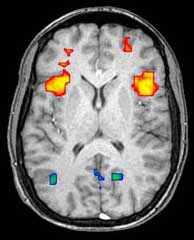
A fMRI scan of the human brain. This method of scanning the brain shows both function (activity shown in color) and tissues of the brain, and requires no radioactive substances to scan.


    Irina Rabkina, an undergraduate neuroscience major and next speaker, graciously answered some questions about the broad field of neuroscience. Rabkina is a Terra Linda alumna who has gone on to study at Scripps College. She does research at the Center for Neuroeconomic Studies with Dr. Paul Zak.

    The human brain is complex, and so is the study of it. Though Rabkina explains everything from decision-making to the structure of the human brain, neuroeconomics—and the puzzling presence of underwear in her upcoming lecture—still remains a mystery that, as Rabkina put it, ‘you’ll have to come to my talk to find out!’

In general, what is the field of neuroscience?

    The most simple definition of neuroscience, in my opinion, is that it is the study of the nervous system–the brain, the spinal cord, nerves, etc. That’s a broad definition, but it’s a broad field.

Narrowing it down, what are you currently researching?

   This is a harder question to answer. I’m still an undergrad, so I research whatever my advisors will let me. At CNS, Dr. Zak researches neuroeconomics. My Scripps advisor, Dr. Michael Spezio, works in the field of social neuroscience and I have a grant to work with him next semester.

In general, what are the different parts of the brain and their function?

   At the most basic level, the brain is divided into the cerebrum, the cerebellum, the limbic system (thalamus, hypothalamus, amygdala, hippocampus), and the brain stem (midbrain, pons, medulla). 
The cerebrum is what most people think of when they think of the brain–it’s the part that looks like a walnut half and is divided into two hemispheres. It is responsible for higher brain function. The different lobes of the cerebrum (and the gyri and sulci within them) all have different associated functions. For example, one of the functions of the frontal lobe is planning. The cerebrum is considered to have evolved later than the other regions.
   The cerebellum is also divided into two hemispheres. It is responsible for things like balance, posture, and coordination of movement. 
   The limbic system performs a range of functions such as memory, sensorimotor control, emotion, etc. Different parts of the limbic system are responsible for these varying functions, just like the different lobes in the cerebellum.
   The brain stem is considered the oldest part of the brain from an evolutionary standpoint. It is involved in regulation of breathing and heartbeat, along with vision, audition, motor control, etc. Again, different parts are responsible for different functions.


What is the brain made of?
    
    The two main types of cells in the brain are called neurons and glial cells. Neurons are the cells that carry electrical signals. They use these signals to ‘communicate’ with each other and other cells in the body in order to perform the functions that the nervous system is responsible for. Glial cells, on the other hand, support neurons. Their functions include insulating and protecting neurons. ‘Glial’ means ‘glue’ in Greek–for a long time, we thought that gluing neurons together was all that glial cells did. Obviously, we now know that this is not the case.

A labelled diagram of the human brain.


What goes on in our brain when we make decisions?

   A lot goes on in the brain when we make decisions. On a cognitive level, we essentially weigh positives and negatives of choices. On a molecular level, hormones like oxytocin and dopamine play a role. Then, of course, there are the neurons firing.
   Clarification: oxytocin and dopamine are just two of the many hormones that play a role in decision making. I think that going into all of them and their functions would be too much (especially since we don’t really know exactly what most of them do)

What is neuroeconomics?

   You’ll have to come to my talk to find out! But really, it’s taking neuroscience techniques and applying them to economics. 


Is it true that people can’t make truly logical, rational decisions before they turn 21? Why/why not?

   Yes and no. Our frontal lobes don’t finish developing until our mid 20s. That doesn’t mean that decisions made before then are necessarily uninformed or irrational… just less so than they would be after we have finished developing.

Could you give some examples of research being done in the field of neuroscience? How do neuroscientists study the brain? 
   
   Like I said before, neuroscience is a very broad field. Just in Claremont, there’s a professor doing research in vocalization in zebra finches, another doing work in nerve response in crayfish, not to mention Drs. Zak and Spezio. And those are just professors I have taken classes with. There are, of course, researchers inside and outside of Claremont doing work in other facets of neuroscience. Depending on the subfield, different techniques are used. So Dr. Zak mostly uses information that cones from analyzing the blood; Dr. Spezio tends to use EEG and fMRI; animal researchers use those animals; etc.

In your opinion, what is the most exciting part of neuroscience?

   I find how little we truly know about the brain exciting. This is a field that has been around for a long time, but the technology is just now getting to a point where we can reliably use it for research into the human brain. I also find the concept of a brain studying brains awesome.

How did you come to know and pursue your field?

   I actually found my interest in neuroscience through Marin Science Seminar. I attended a presentation by Dr. Ray Swanson of UCSF that I really enjoyed. I stayed to chat with him after his talk, and that turned into a summer internship which helped me realize just how much there is to learn about the brain and how cool it truly is.

Irina Rabkina will be presenting “Memory, Money, and Heat-sensing Underwear” on Wed., January 9th, from 7:30 to 8:30 p.m. at the Marin Science Seminar. The Marin Science Seminar takes place at Terra Linda High School, room 207. Come check us out on Facebook as well!


Sandra Ning