Brain Medicine

Marin Science Seminar presentation:

Brain Medicine: Bridging the divide between Psychiatry and Neurology” with Ellen Bradley M.D. of UCSF Weill Institute for Neurosciences

Wednesday, March 25, 2026 * 7:30-8:30pm * Terra Linda High School Innovation Hub, San Rafael, CA

Dr. Ellen Bradley will share her journey to becoming a professor of psychiatry and behavioral sciences at UCSF, where she now bridges the divide between psychiatry and neurology through innovative research. Dr. Bradley will explain how she studies neuropsychiatric disorders. She’ll discuss the technical aspects of her clinical trials, which investigate how the brain’s chemistry interacts with movement and mood disorders. Students will learn about the field of psychopharmacology and how modern brain medicine requires understanding both the biological mechanisms of psychiatric symptoms and the neurological systems that control movement, attention, and cognition. Join us and Learn!  

Dr. Ellen Bradley

Bio: Ellen Bradley, MD, is an assistant professor of psychiatry and behavioral sciences at the University of California, San Francisco (UCSF), lead psychiatrist for the Parkinson’s disease Research, Education, and Clinical Center (PADRECC) at the San Francisco VA Medical Center, and associate director of the UCSF translational psychedelic research (TrPR) program. Her goal is to advance effective, multidisciplinary care for people living with neuropsychiatric disorders through clinical practice and research. She uses mechanistic clinical trials to understand the effects of psychoactive drugs and their potential as treatments for illnesses that span the psychiatry-neurology divide, including Parkinson’s disease (PD). Dr. Bradley leads the TrPR program’s studies focused on neurodegenerative disorders.

Links:

Creepy or Captivating: A Spider Scientist’s Perspective

Marin Science Seminar presents:

Creepy or Captivating: A Spider Scientist’s Perspective” with Trinity Walls, Ph.D. candidate, UC Berkeley

Wednesday, October 1, 2025; 7:30-8:30pm; Terra Linda High School Innovation Hub, San Rafael, California

Description: Modern media tend to portray spiders as eight-legged, multi-eyed terrors. With deeper exposure and open minds, can we come to see the beauty and benefits of our arachnid aquaintances? UC Berkeley scientist Trinity Walls thinks so. Trinity will share her journey to becoming an arachnologist (a spider scientist), and will discuss her research on the mating and communication behaviors of jumping spiders. Along the way she will address arachnophobia, and try to convey the beauty and benefits of spiders in our lives.

Trinity Walls

Bio: Trinity Walls is a PhD candidate at the University of California Berkeley studying how mate choice patterns shift over time and how these shifts affect hybridization. She is originally from North Carolina and has always been fascinated by spiders. The more she learned about them, the more she realized much of the widely circulated information about them was false and so she sought to study them herself. Trinity has studied orb-weavers in Puerto Rico, wolf spiders during her Masters in Ohio, and now jumping spiders at Berkeley. She is happiest when she is in the field searching for spiders, conversing with her lab members, and engaging in outreach activities.

Links:

Alexa, Astro, and Nova, Oh my!

Marin Science Seminar presentation:

Alexa, Astro, and Nova, Oh my! The science of tuning virtual assistants

with Camden Pettijohn (TLHS ’18) of Amazon

Wed. October 15, 2025, 7:30-8:30pm, Terra Linda HS Innovation Hub

This talk will discuss what happens behind the scenes of Amazon’s voice technology development, exploring how the folks behind Alexa, etc. optimize virtual assistants for real-world performance. It will introduce the benchmarking of automatic speech recognition (ASR) from the familiar Alexa to the newer Nova Sonic model. Attendees will hear about how Amazon’s simulation labs recreate authentic acoustic environments—complete with background TV noises, among other varying sound conditions—to test and refine virtual assistant capabilities under realistic use cases. The presentation will discuss accessibility features, including adaptive speech recognition, in addition to practical applications. Through concrete examples of acoustic engineering challenges and solutions, this talk reveals some of the science behind making virtual assistants not just functional, but accessible and reliable in the diverse environments where people actually use them.

Camden Pettijohn graduated from the University of California, Davis in 2022 with a B.S. in Computer Science. That same year, he was hired by Amazon Labs to work on benchmarking Alexa Speech Recognition and LLM (Large Language Model) modalities. Prior to that, he was a game development intern at the UC Davis Sing Lab and a director of the Game Development and Arts Club (GDAC). Camden has years of experience writing code, making video games, drawing art, and more. He is also a former Marin Science Seminar intern and a graduate of Terra Linda High School (2018)!

Links:

The Biology of Consciousness

Upcoming talk: “The Biology of Consciousness: an anesthesiologist explores the circuits behind our mental states” Wed. Sept. 24, 2025 with Art Wallace, M.D. Ph.D. of UCSF and VAMC SF

One of the great mysteries of neuroscience is how the brain creates conscious experiences. Over the last 2,500 years scientists have worked to understand much of anatomy, physiology, and how the brain works. Neuroanatomy and neuro-control are well understood. Input-output functions of the brain have been mapped, including sensory, motor, and autonomic systems. Modern tools have revealed many neural circuits, and we are starting to understand the effects of some of these circuits on mental illness.

Nonetheless, the neuroanatomic center of consciousness remains elusive. We aren’t even really sure how to measure or what constitutes consciousness. How does an anesthesiologist, who routinely eliminates and then restores consciousness, define and measure consciousness? Mathematical models are commonly used to generate and test hypothesis; can we create a mathematical model of consciousness? Would this model help us to understand how the brain creates it? Dr. Wallace will discuss the beginnings of a simple model of consciousness from a neuroscience and engineering perspective.

Art Wallace
Art Wallace MD PhD

Art Wallace is one of the founders of the Marin Science Seminar. He is a cardiac anesthesiologist, Professor Emeritus and Vice-chairman of Anesthesiology and Perioperative Care at the University of California San Francisco, and Chief of Anesthesia at the San Francisco VA Medical Center. Dr. Wallace has developed medications, surgical procedures, medical devices, and medical informatics software.

Previous Talks by Art Wallace at MSS:

Descriptions for the following talks can all be found at this link.

  • Invention in Medicine: How Medical Devices get Invented and Go to Market (Oct. 26, 2016; Feb. 16, 2011; Dec. 10, 2008)
  • Making Medicine Safer with Drugs, Devices, Software & More (Oct. 23, 2013)
  • Computers, Robots, and Medical Education, Oh My! (Dec. 5, 2012)
  • Developing a Drug to Prevent Death!: Perioperative Beta Blockade (Mar. 19, 2008)

Human Hibernation: Is it Possible for Space Flight?

with Art Wallace, M.D. Ph.D., UCSF and VA Medical Center, San Francisco

WHEN?: Wednesday, February 5th, 2025 – TLHS Innovation Hub – 7:30 – 8:30pm

Human Hibernation? Fact or Faction?
Human Hibernation: Fact or Faction?

Description: Sci-Fi movies often depict hibernation as the secret to long-duration human spaceflight. (Note: Even with ideal starship acceleration and deceleration — AND with the benefit of relativistic effects — the nearest exoplanet is 3.6 YEARS away!) Of course, the boundary between science fiction and science fantasy is hazy. Advances in anesthesia may facilitate hibernation. Physiologically, however, general anesthesia is detrimental in the short term, and worse in the long term. Will long-spaceflight medical advances ever be able to deal with this sobering hibernation fact that roughly half of naturally-hibernating animals never revive? Join us to find out. Bring your questions and your curiosity!

Art Wallace, MD PhD
Art Wallace in the OR

Bio: Art Wallace, M.D, Ph.D is a cardiac anesthesiologist, professor and vice-chairman of anesthesiology and perioperative care at the University of California San Francisco, and Chief of Anesthesia at the San Francisco VA Medical Center. Dr Wallace has developed medications, surgical procedures, medical devices, and medical informatics software.

Links:

How Do Humans Influence Evolution? Studying the Impacts of Human-made Dams on Endangered Trout Anatomy

with Jackie Galvez, Ph.D. candidate, UC Berkeley

WHEN?: Wednesday, March 12th, 2025 – TLHS Innovation Hub – 7:30 – 8:30pm

The organism I study (steelhead trout) and the main subject of my talk! (Photo credit: John McMillan)

Description: Humans impact ecosystems in a variety of ways, with urbanization, climate change, and infrastructure projects posing unique challenges organisms must overcome. In freshwater river systems, human-made dams pose major risks to endangered fish species, disrupting habitats in many ways. Jackie Galvez’s research investigates the influence of damming on one important aspect of fish biology: anatomy. By using museum collections to study fish body shape and skeletal anatomy, we can better understand how fish adapt to human influences, better informing conservation efforts for California native species. Bring your questions and your curiosity!

Jackie Galvez

Bio: Jackie Galvez is an ichthyologist (fish biologist) studying the impacts of artificial dam barriers upon body shape and skull anatomy in endangered steelhead trout. More broadly, Jackie is interested in anthropogenic influences upon trophic ecology (diet) and morphology (anatomy) of fish living in human-impacted environments. She interned for the Los Angeles County Natural History Museum, where she conducted her senior thesis research and learned collection management, and also conducted an independent research project on cichlid evolutionary relationships as a National Science Foundation intern at the Field Museum of Natural History in Chicago. Jackie received her Bachelor of Science degree in Biology from Loyola Marymount University, where she researched invasive plant presence at a Los Angeles urban park (Ascot Hills), the impacts of warming temperatures on California black walnut seeds, and conducted an anatomical comparison of rodent skulls in polluted versus non-polluted locations in Southern California. Currently she is working on her Ph.D. in Dr. Jack Tseng’s FAVE lab at UC Berkeley’s department of Integrative Biology and the Museum of Vertebrate Zoology (MVZ).

Links:

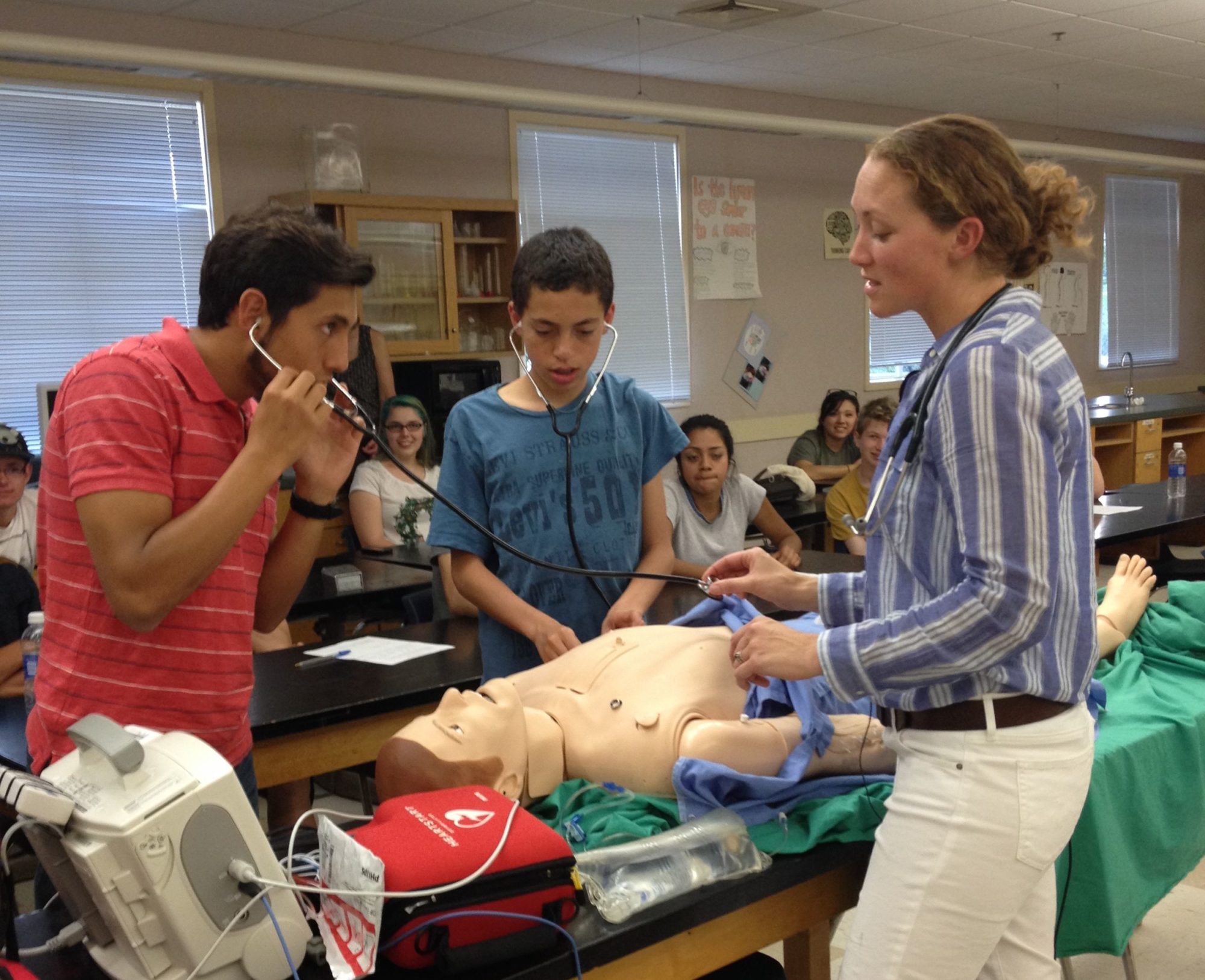
Healthcare Simulation Lab! Empowering future medical providers through healthcare simulation

with Karrina Mock CRNA and Derrick Duarte CRNA of the VA Medical Center San Francisco

Wednesday, April 22, 2026 ~ 7:30 – 8:30 pm at Terra Linda High School’s Innovation Hub

Description: The ever-popular VAMC SF Healthcare Simulation Lab returns! Join us on a journey exploring how technology has heightened medical education through demonstrations, simulations and virtual reality. We’ll focus on basic life support and team dynamics to get our audience to save a life! 

Bios: Karrina is a Simulation Instructor and Certified Registered Nurse Anesthetist at the San Francisco Veterans Affairs Medical Center. She received her BSN at the University of California, Irvine followed by an MSN at Samuel Merritt University. She has worked at multiple hospitals, including Stanford Hospital, UC Irvine Medical Center, Kaiser Permanente facilities and the San Francisco VA Health Care Services. Simulation in healthcare has allowed her to combine her passion for anesthesia, innovation and education into an advanced learning environment for the new generation of learners.

Derrick is a Nurse Anesthetist at the San Francisco VA Medical Center. He grew up in San Diego where he earned a BS in Biochemistry & Cell Biology from UC San Diego. He worked in cancer research and biotech before obtaining his Masters in Nursing degree from University of San Diego. He obtained his MSN and anesthesia degree at Samuel Merritt University in Oakland and has been working as a CRNA in the operating room and simulation lab at the San Francisco VAMC and serving as Advanced Pharmacology instructor at USD since 2018. On his off time, Derrick enjoys cooking, providing anesthesia on medical mission trips, hiking, backpacking, running trails, and rock climbing.

(Previous presentations: 4/30/25; 3/20/24)

Links:

Auroras and Solar Storms

with Laura Peticolas, Ph.D. of Sonoma State University

WHEN?: Wednesday, January 29th, 2025 – TLHS Innovation Hub – 7:30 – 8:30pm

Aurora borealis over Eielson Air Force Base, Alaska (Wikimedia)

Description: What are those amazing auroras we’ve been seeing around here in recent years? Laura Peticolas earned her B.A. in mathematics and physics at the University of Oregon Honors College and her Ph.D. in physics studying the aurora at the University of Alaska, Fairbanks. She then spent 3 years as a post-doctoral fellow at the University of California’s Space Sciences Laboratory continuing her study of Earth’s aurora using NASA’s Fast Auroral SnapshoT satellite data and computational models. During this time, she expanded her research to include developing computer models of the Martian aurora. She continued these computational research efforts while transitioning to the profession of education and outreach in 2008. In this presentation she will share her knowledge of auroras and solar storms. Bring your questions and your curiosity!

Bio:Dr. Laura Peticolas is Associate Director of EdEon STEM Learning at Sonoma State University, where she works to engage middle and high-school science teachers, high school students and college students in earth and astronomy participatory experiences using coding, hardware, and experimental design. In 2000, she received her PhD at the University of Alaska, Fairbanks in physics, studying the northern lights. At the University of California, Berkeley (UC Berkeley), she continued her scientific research pursuits, while also engaging in education and outreach efforts. In 2010, she became a Senior Fellow at the Space Sciences Laboratory at UC Berkeley, and Director of Multiverse, the Space Sciences Laboratory’s education group. This move completed her transition from science research to science education as a focus. In 2017, she moved to Sonoma State University in order to continue her work with high school science teachers and undergraduate students historically underserved in Science, Technology, Engineering, and Mathematics (STEM).

Links:

Ask an Epidemiologist! Everything you wanted to know about the flu (and vaccines) but were afraid to ask

with Michaela George Ph.D. M.P.H. & Brett Bayles Ph.D. of Dominican University, San Rafael

WHEN?: Wednesday, February 12th, 2025 – TLHS Innovation Hub – 7:30 – 8:30pm

Description: Ever wondered how the flu spreads and how scientists predict what it’s going to do? How about the flu vaccine? Join us to learn all about that and more from two local public health researchers!

Bios: Dr. Michaela George grew up in Marin and has always felt a strong connection to her community. After several trips to the east coast for her education (Middlebury College in Vermont and Boston University in Massachusetts), she settled in the Bay Area to pursue her passion for epidemiology and public health. Dr. George joined the Global Public Health program at Dominican University in 2019. She earned her Masters of Public Health (MPH) with a concentration in Epidemiology from Boston University School of Public Health, and her PhD in Epidemiology from the University of California, Berkeley. In the past, Michaela has worked on research projects at UC Berkeley, UCSF, and Boston Medical Center in the Pediatrics Department. She also has a long history of incorporating students into her research, both in the classroom and the community. Currently, she is working on several research projects with Marin County Health & Human Services designed to predict opioid overdoses and understand cadmium exposure and breast cancer. She has also established relationships with partners like Center for Domestic Peace, the Ritter Center, the Rite of Passage Research Collaboration, and Play Marin, using her expertise to evaluate existing programs, design research studies to answer grant-funded questions, and develop sustainable strategies to enact change.

Brett Bayles’s research focuses on planetary health and on better understanding the human health impacts of global environmental change. He utilizes an interdisciplinary approach to address these themes, leveraging spatial statistics and qualitative and quantitative epidemiological methods. Recent research collaborations include vector-borne disease epidemiology in Costa Rica, tick-borne disease emergence in the Midwest, malaria in Uganda, biological invasions in California, and ecosystem services in Kenya. He teaches courses in epidemiology, applied biostatistics, global environmental health, and planetary health perspectives. Brett earned his MPH with a focus on Biosecurity, and his PhD in Public Health Studies at Saint Louis University.

Links:

Exploring BioAstronautics: A Path to the Stars!

with Aerospace Engineer and Terra Linda High School alum Ben Foehr

Wednesday, March 19, 2025, 7:30-8:30pm on Zoom (HOW-TO: Fill out contact form with your email and mention this event in the comments section or ask your teacher for the link. Because of our account limitations, only participants from within the U.S. may attend live. All sessions will be recorded and posted to our Vimeo account within the month. )

A Terra Linda High School alum working in STEM presents about his career path. With Ben Foehr (TLHS 2018)


Right now, we’re at the dawn of a new space age. As humanity prepares to return to the moon and beyond, one might ask: how can I be a part of this? Join Ben Foehr, BS in Aerospace Engineering and former graduate student studying Human Spaceflight at Colorado University at Boulder, for a look into the twists and turns this journey has in store, and, more importantly, how we can reach the stars!

Ben Foehr, Aerospace Engineer

Ben Foehr grew up in San Rafael, graduating TL in 2018. As a student he was a sprinter on the track team, a lawyer for TL’s mock trial team, and an intern for the Marin Science Seminar. In 2022 he graduated CU Boulder with a bachelors in Aerospace Engineering, and is currently studying there for his masters in BioAstronautics. He has worked on Cubesats, Sounding Rockets, and proprioceptive function research for astronauts. Currently he works at Blue Origin/Honeybee Robotics, focusing on life testing for motion control systems.

Links:

LASP: https://lasp.colorado.edu/home/

LinkedIn: https://www.linkedin.com/in/ben-foehr-ba32a6208/

Honeybee Robotics: https://www.honeybeerobotics.com

Previous MSS talk (2/15/23): https://marinscienceseminar.com/environmental-science-aerospace-double-feature/#ben_foehr

Wednesday, March 19, 2025, 7:30-8:30pm on Zoom (fill out contact form or ask your teacher for the link)