Finding and Fighting Cells that can Kill us: One Patient’s Story

with Bradley Stohr MD PhD of UCSF

WHEN?: Wednesday, November 20th, 2024 – TLHS Innovation Hub – 7:30 – 8:30pm

Description: We humans are extraordinarily complex organisms, each of us composed of roughly 30 trillion cells. Our health depends on all of those cells working together in harmony, and just one cell going rogue can potentially spell disaster. In this session, Bradley Stohr of UCSF will share one patient’s story of battling a deadly disease. We’ll discuss how the cells that cause disease can be identified, how doctors can fight back against those cells, and why our best efforts are unfortunately not always enough.

Bradley Stohr MD PhD

Bio: Bradley Stohr MD PhD is Professor and Vice Chair in the Department of Pathology at University of California, San Francisco. He received a bachelor’s degree in Biology from Swarthmore College in 1995 and completed the Medical Scientist Training Program at Duke University in 2003. He has been in the Department of Pathology at UCSF ever since, first as a medical resident and fellow and then as a faculty member. He ran a basic science laboratory for many years but now primarily focuses his efforts on clinical practice (with expertise in genitourinary pathology) and as one of the primary administrative leads for his department.

Links:

What We Were Missing: How Studying the Whole Skeleton Changes our Understanding of Carnivore Evolution and Ecology

with Emily Bogner, Ph.D. candidate UC Berkeley

WHEN?: Wednesday, November 13th, 2024 – TLHS Innovation Hub – 7:30 – 8:30pm

A carnivore on the hoof

Description: In paleontology, the skull, arms, and legs can provide valuable insights into the diversity of diets and movements in extinct animals. As animals evolve, all parts of their skeleton evolve simultaneously as a coordinated whole, however, the research paleontologists conduct often examines these parts of the skeleton independently. Emily Bogner’s research unveils the intricate interplay of the integrated evolution between the skull, arms, and legs. This broadens our understanding of how animals evolved to be best suited for their environments.

Bio: Emily is a fourth year PhD candidate at UC Berkeley and affiliate of the University of California Museum of Paleontology (UCMP) and Museum of Vertebrate Zoology (MVZ). She is broadly interested in evolutionary biomechanics and functional morphology of vertebrates. Her dissertation focuses on how the carnivoran skeleton has evolved for prey acquisition and processing. Prior to working in the Functional Anatomy and Vertebrate Evolution (FAVE) Laboratory at Cal, she received her B.S in Geology and Biology from Kutztown University, and her M.S. in Geosciences with a concentration in Paleontology from East Tennessee State University.

Emily Bogner

Links:

Marine Wildlife off our Coasts: Studying Sea birds, Marine Mammals and More

with Meredith Elliott M.S. of Point Blue Conservation Science

WHEN?: Wednesday, October 30th, 2024 – TLHS Innovation Hub – 7:30 – 8:30pm

Point Blue Conservation Science

Description: Our oceans are facing many threats, including warming temperatures, ocean acidification, and overfishing (to name a few). At Point Blue Conservation Science, we have over 50 years of experience studying marine wildlife and what they can tell us about the health of our ocean. We work with federal agencies (U.S. Fish and Wildlife Service and the National Oceanic and Atmospheric Administration) to monitor seabirds and marine mammals on the Farallon Islands National Wildlife Refuge (located ~30 miles west of the Golden Gate Bridge) and to conduct at-sea surveys in the National Marine Sanctuaries off our coast. Come hear how we are finding ways to protect seabirds from hot weather, using diet data from seabirds and sea lions to help make our fisheries more sustainable, what we are learning about ocean acidification, and what we are doing to save whales from ship strikes.

Bio: Meredith earned a B.S. in Zoology from the University of California, Davis and an M.S. in Marine Biology from San Francisco State University, the latter investigating the diet of the California Least Tern colony at Alameda Point (formerly the Naval Air Station, Alameda). After finishing undergraduate work she was advised to apply for a seabird research assistant position on the Farallon Islands, and she has been hooked on seabirds ever since! She was then hired to help monitor Double-crested Cormorant populations on the Richmond-San Rafael and San Francisco-Oakland Bay Bridges. Other Point Blue projects she has worked on include monitoring breeding success and diet of the Alameda Point Least Tern colony and documenting seabird mortality during oil spills as part of the Processing Strike Team within the Oiled Wildlife Care Network.

As a Principal Scientist in Point Blue’s California Current Group, Meredith investigates the diet of marine predators to understand changing forage species communities in coastal California. She is a Program Leader with ACCESS (www.accessoceans.org), a partnership among Point Blue, our two national marine sanctuaries (Greater Farallones and Cordell Bank), and several other entities to conduct ocean research in our region. In addition to overseeing and synthesizing the many datasets related to the ACCESS partnership, Meredith examines the effects of varying oceanographic conditions on various zooplankton taxa in our marine environment. She also supervises the Point Blue marine laboratory, where marine predator diet and zooplankton studies happen with the help of awesome lab research assistants and volunteers!

Links:

We Love Our Wetlands ! : The Future of the San Francisco Estuary

SF Estuary

with Julie Gonzalez Ph.D. of SFSU’s SF Bay National Estuarine Research Reserve

WHEN?: Wednesday, October 9th, 2024 – TLHS Innovation Hub – 7:30 – 8:30pm

SF Bay National Estuarine Research Reserve

Description: San Francisco Bay National Estuarine Research Reserve (NERR) scientists will talk about their work protecting and restoring the estuary’s vital tidal marsh habitats including China Camp. We’ll explore how these ecosystems help combat sea-level rise and support the diverse wildlife that calls the Bay Area home. Learn about the science and strategies behind our restoration projects and discover how you can play a part in preserving the natural beauty and resilience of our coastal environments.

Bio: Julie serves as the Conservation and Restoration Coordinator for the reserve. Julie has studied and worked in San Francisco Bay since 2014, and brings a wealth of ecological knowledge of the system and the various stakeholders involved in its conservation and restoration. Her research has focused on the impacts of sea-level rise and invasive species in tidal marsh systems, aiming to inform sea-level rise adaptation planning, enhance habitat restoration design, and consider eco-social factors in estuarine monitoring. She is dedicated to leveraging this experience and building collaborations to advance the NERR’s conservation and restoration efforts across the San Francisco Estuary. She actively engages with stakeholders to ensure these efforts inform and align with broader frameworks at the regional, state, and national levels. Julie holds a BSc in Biology from Georgia Tech, a MSc in Marine Science from the Estuary & Ocean Science Center, San Francisco State University, and a PhD in Ecology from the University of California, Davis, where she was a Margaret A. Davidson Fellow working in the NERR’s component site in China Camp State Park.

Links:

Dangerous Materials: How California Protects Communities and the Environment from Hazardous Waste

with Julie Pettijohn, MPH, CIH, of California Department of Toxic Substances Control

WHEN?: Wednesday, September 25th, 2024 – TLHS Innovation Hub – 7:30 – 8:30pm

Description: California’s Department of Toxic Substances Control (DTSC) works to ensure that companies are following the rules for proper management of their hazardous waste. Hazardous waste includes materials such as waste oil, no longer needed household products like cleaners or paints, or discarded commercial chemicals, which if not properly managed, can contaminate water, cause adverse human health effects, and impact ecosystems. Speaker Julie Pettijohn will present examples from local facilities inspected and will discuss equity work being done by the department to ensure equitable enforcement activities.

Bio: Julie Pettijohn is an Environmental Program Manager at California Department of Toxic Substances Control. She has worked as an environmental health scientist, designed and completed environmental site assessments for industrial and commercial properties, worked as a Lead Risk Inspector/ Assessor, and audited facilities for compliance with hazardous materials management & worker health and safety regulation. Ms. Pettijohn has also published in the fields of toxicology, risk assessment, and human health risk.

Links:

Marin Agricultural Land Trust (M.A.L.T.): Stewarding Marin’s Working Lands

Marin Agricultural Land Trust

with Eric Rubenstahl, M.S. , Associate Director of Stewardship, M.A.L.T.

WHEN?: Wednesday, September 18th, 2024 – TLHS Innovation Hub – 7:30 – 8:30pm

Marin Agricultural Land Trust protected lands

Description: Conserving Marin County’s farms and ranches not only means protecting the land through conservation easements, but also ensuring its agricultural viability and helping to steward the health of the land. MALT supports local farmers and ranchers through grants and technical assistance and leveraging partner agencies funding opportunities. MALT stewardship staff Eric Rubenstahl will share the history of MALT, land conservation strategies, and how ongoing stewardship protects and enhances the ecological and agricultural values of Marin’s working lands.

Bio: Associate Director of Stewardship Eric Rubenstahl joined MALT in 2016 to assist in monitoring existing conservation easements, help evaluate future agriculture conservation easements and facilitate best management practices on MALT’s working landscapes. Prior to joining the MALT team, Eric worked with the City of Fort Collins Natural Areas Department and with the South Yuba River Citizens League in Nevada City, California. Eric holds a master’s degree in conservation leadership from Colorado State University, where his thesis research consisted of creating a management plan for a 22,000-acre protected area in southern Belize.

Links:

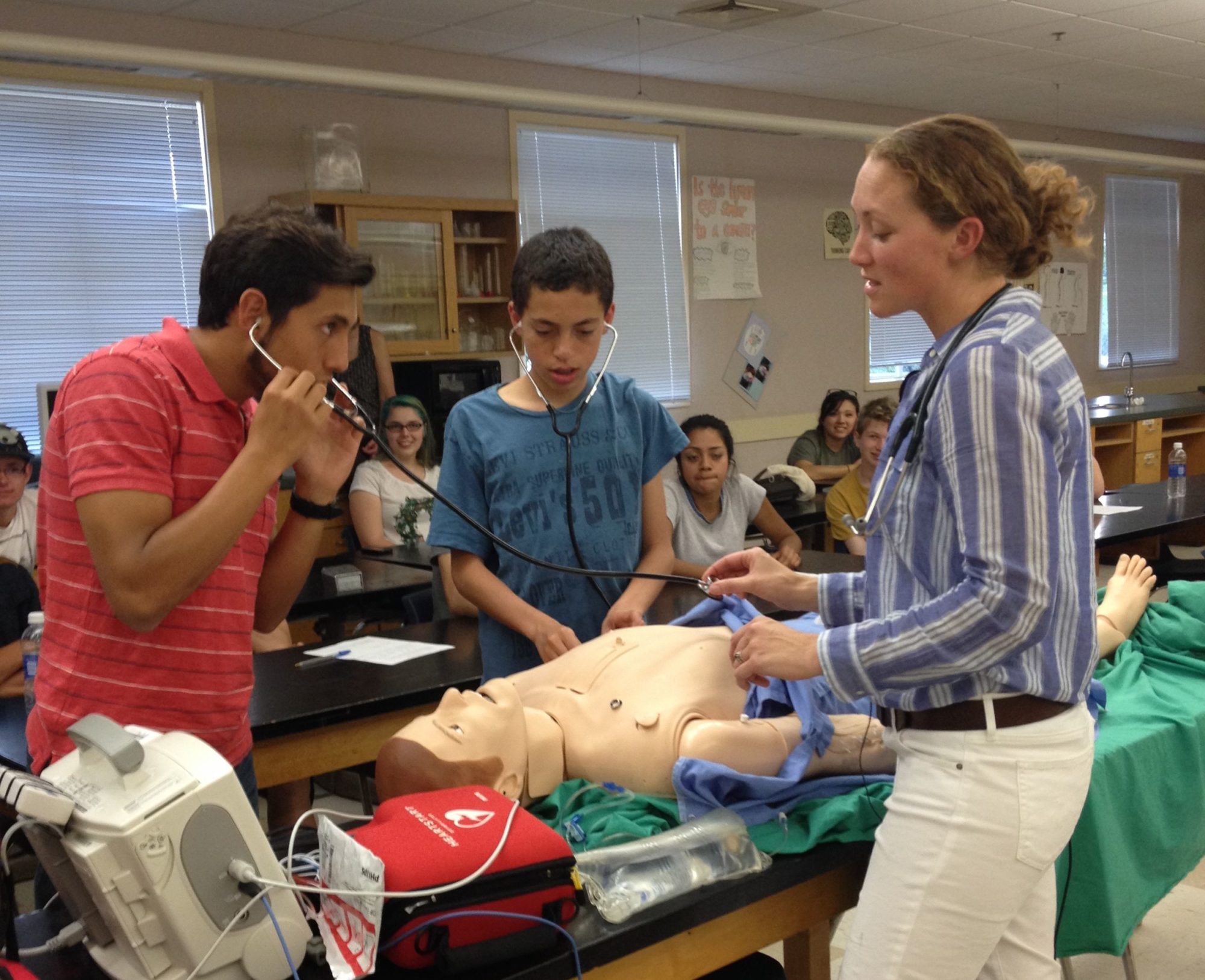
From Code Blue to Code Chronic: Insights into Emergency Medicine

with Steven Garcia, M.D. of Kaiser Permanente, San Rafael

Wednesday, April 17th, 2024 – 7:30-8:30 pm – Innovation Hub at Terra Linda High School, San Rafael

Description: An Emergency Medicine doctor thrives in the chaotic, bustling environment of the ER. Join Dr. Steve Garcia as he offers a glimpse into his non-traditional path to becoming a physician. He will describe the training of Emergency Physicians and how they diagnose and treat all patients in the Emergency Room, as there are differences as compared to other specialties. There will also be discussion of a day in the life in the ER and shortcomings of today’s emergency care system.

Bio: Dr. Steve Garcia’s journey to becoming a physician took a non-traditional route. Born and raised in Michigan, Dr. Garcia attended the University of Michigan earning degrees in Engineering Physics and Biomedical Engineering. He later moved to the Bay Area where he was a software engineer for seven years. But he really wanted to be a physician. Despite being rejected from medical school twice, he didn’t give up! In 2010 he earned his medical degree at Northwestern Feinberg School of Medicine in Chicago, IL, and in 2014 he graduated from the Cornell/Columbia residency program in Emergency Medicine in New York City. He is married with two teenage boys who both attended Terra Linda High School. He enjoys stock and option trading, the Grateful Dead, playing pickleball, and hiking.

Steve Garcia, M.D.

Data Science for Social Good

with Abby Smith Ph.D. of NORC, University of Chicago

Wednesday, February 28th, 2024 7:30 – 8:30 pm at Terra Linda High School’s Innovation Hub

Description: Entity resolution, or deduplication, is sorting out duplicates in social networks. Picture cleaning up your friend list by comparing names and ages of potential duplicates (e.g. Abigail Smith vs. Abby Smith) . New methods group similar entities together, using friends’ connections to help. But here’s the thing: it’s not perfect, especially without a perfect list to compare to. Abby’s research looks into how good our sorting is, how to tweak the settings, and how these affect the bigger picture of the network. She tested this on real-world groups in Kentucky and Chicago, making sure sorting didn’t distort overall network inferences. In this presentation she will share how this work can be used for social good. Questions welcome!

Abby Smith

Bio: Abby Smith recently received her Ph.D. in Statistics from Northwestern (2023) and is currently a statistician at NORC, working to improve entity resolution in big national opinion surveys. With a BS in Mathematics (2016) and an MS in Statistics (2017) from Carnegie Mellon, she’s driven by data science for social impact. As a 2022 DSSG fellow at CMU, Abby collaborated on a homelessness prevention project with Allegheny County DHS. Outside of stats, she enjoys running, backpacking, and has explored all 50 US states.(Fun fact! Abby and Alfia met through Postcrossing!)

Links:

Getting a Grip on Geysers

with Mara Reed, Ph.D. candidate at UC Berkeley’s Department of Earth and Planetary Science

Wednesday, February 7th, 2024 * 7:30 – 8:30 pm at Terra Linda High School’s Innovation Hub

Description: Geysers are rare geological features—only ~1000 exist on our planet! Come learn about what geysers are, where they form, and how scientists study them. Then, get acquainted with one of Yellowstone National Park’s star performers: Steamboat Geyser, the tallest active geyser in the world. Using Steamboat as a case study, we’ll investigate why geysers might suddenly come to life after many years without erupting and whether earthquakes can influence geyser activity.

Mara Reed

Bio: Mara is a Minnesota-born PhD candidate in the Department of Earth and Planetary Science at UC Berkeley. She loves watching water boil and wants to understand the reasons why geysers start and stop erupting. If Mara isn’t in California, there is a 90% chance she’s in Yellowstone National Park for fieldwork or fun. When not thinking about geysers, Mara likes to explore and photograph caves. She also enjoys hiking and is trying to overcome her fear of climbing by bouldering at Pacific Pipe.

Links:

Beware of the Aliens! Studies on Invasive Plant Pathogens at Dominican University

with Wolfgang Schweigkofler Ph.D. of Dominican University, San Rafael

Wednesday, March 20th, 2024 ~ 7:30 – 8:30 pm at Terra Linda High School’s Innovation Hub

Description:

Invasive organisms are animals, plants or microorganisms, which evolved in a different ecosystem and then were introduced into a new area by human activity. In the new environment, these invasive organisms can express some very negative effects on native biodiversity, e.g. by overgrowing native plants, killing native animals or spreading animal or plant diseases. Our research group at Dominican University studies the effects of tiny microorganisms on our forests in Coastal California. A ‘fungus-like’ pathogen, called Phytophthora ramorum, can infect many tree species (e.g. oaks) and causes a disease called ‘Sudden Oak Death’. We try to better understand the biology of the pathogen and develop methods to control its spread. We use a number of different methods, e.g. microscopic observations, immunotests and DNA-sequencing, to study the disease in our research lab, our research field site and in the natural environment.

Bio: Wolfgang Schweigkofler grew up on a small family winery in Bozano/Bozen (Italy). He holds a master degree in Microbiology from the University of Vienna, Austria, and a PhD in Applied Biology from the University of Natural Resources and Applied Life Sciences, Vienna. Wolfgang was a Postdoctoral fellow first at the Research Center Laimburg, Italy, working on bio-control of soil-dwelling insects, and then at UC Berkeley,US, working on forest pathogens. From 2004-2011 he  worked as a senior plant pathologist at the Research Center Laimburg. He then moved to the USA, working shortly at a biotech start-up before accepting a position at the Dominican University of California in San Rafael. Currently he is a Research Associate Professor and program manager at NORS-DUC, the National Ornamentals Research Site at Dominican University. His research interests include diseases of grapevine, apple and ornamentals, forest pathology, biological control, biodiversity and invasive biology. Wolfgang co-authored two book chapters on fungal biodiversity and published more than 30 scientific and technical papers.

Links: