Cinzia Perlingieri, Ph.D.

Title: “Mirroring Past and Future: How Cutting-edge Technologies Help us Unveil Ancient Worlds” with Cinzia Perlingieri Ph.D.

Date, Time, Location: Wednesday, September 26th, 2018; 7:30 – 8:30 pm at Terra Linda HS in San Rafael, Room 207

Description: Archaeology is the search for empirical data to answer such big questions as “where do we come from?” and “what does it mean to be human?” The way archaeologists study the past has changed dramatically over time. In collecting things for museums, we started to wonder where and when things happened. Later on, archaeologists became concerned with why and how cultures change, how people lived, if various cultures connected and how. In this lecture we will learn how modern, digital technologies have changed the way we study the past, and what we can discover using these new tools.

Bio: Cinzia Perlingieri received her Ph.D. in Archaeology at the University of Naples “l’Orientale”, Italy. She participated in her first archaeological project in Sudan, Africa, in 1989 as archaeologist and ceramic analyst. Her research focused on the archaeology of early states in northeast Africa (Egypt, Sudan, and Eritrea/Ethiopia), with a specialization in ceramic studies. During her travels in Africa and the Near East she experienced all aspects of archaeology and heritage, from excavation and survey of large cultural territories to the study and archiving of collections. She has been actively involved in numerous initiatives aimed at integrating digital technologies in the practice of Cultural Heritage. She was a member of the Board of Directors of the European initiative “EPOCH – The European Network of Excellence in Open Cultural Heritage”. Dr. Perlingieri co-founded a nonprofit based in San Rafael aimed at helping cultural institutions learn and adopt digital technologies for the preservation of the past. She currently works in the nonprofit sector.

RSVP on Facebook here.

Links:

Join us and learn! – Back to the Marin Science Seminar calendar

Welcome to the new Marin Science Seminar website

Welcome to the new Marin Science Seminar website! We’re happy to have finally migrated over to a mobile-friendly format, and this site will also allow us to have the blogging all in one place. Stay tuned for the Fall 2018 lineup and information about internship for the this coming academic year.

January – March 2018 at Marin Science Seminar

Marin Science Seminar starts up again January 17th. Join us this semester for Wild Worms, Exoplanets, The Fountain of Youth and more. Join us and learn! 🙂 http://www.marinscienceseminar.com/calendar.html#spring 

JANUARY

17: “Wild Worms and Mineral Mosaics: A glimpse into hydrothermal vent communities” with Jennifer Runyan of the Lawrence Hall of Science

24: “Exoplanets” with Warren Wiscombe of NASA-Goddard Space Flight Center

31: “The Fountain of Youth: Is it a Myth?” with Chong He of the Buck Institute

FEBRUARY

28: “Gnashing, Gnawing, and Grinding: The Science of Teeth” with Tesla Monson of UC Berkeley

MARCH

7: “The Marin Wildlife Picture Index Project” with Lisette Arellano of One Tam and Golden Gate National Parks Conservancy

28: “Name that Bloodsucker!” with Eric Engh of Marin-Sonoma Mosquito Vector

Flooded by Science and Sea Water: China Camp Sea Level Rise

Local Science for Teens & Community this Wed. 11/8 at Marin Science Seminar:

Flooded by Science and Seawater: 
King Tides and What they Can Tell us about Sea Level Rise at China Camp State Park

with Sarah Ferner of SF Bay National Estuarine Research Reserve – a program of NOAA and SFSU http://marinscienceseminar.com/speakers/sferner.html
Wednesday, November 8th, 2017
7:30 – 8:30 pm
Terra Linda High School, 320 Nova Albion, San Rafael – ROOM 207

The tidal marshes at China Camp State Park play a key role in helping scientists understand how marshes respond to sea level rise and how we can continue to protect them. In this talk, we will hear about what scientists have learned so far and how they are learning more through research right here in Marin. 

Sarah Ferner develops, leads, and teaches education programs for NOAA’s National Estuarine Research Reserve System in San Francisco Bay. As the Reserve’s first Education Coordinator, her job tasks are diverse – ranging from writing for publications and interpretive signs, to teaching teachers about new Next Generation Science Standards, to counting plants deep within Suisun Marsh, and more. Through it all, she likes to traverse the muddy transitions between water and land, and between science and education, following her passion for connecting people to nature through science. She is a certified California Master Naturalist. Previously, Sarah worked closely with the Chesapeake Bay-Virginia NERR as a Graduate Research Fellow where she studied the vegetation community change in a tidal freshwater marsh. Sarah received a B.A. in Biology from Carleton College and an M.Sc. in Marine Science from the Virginia Institute of Marine Science/College of William and Mary, and has over 15 years of experience teaching science to students, community members, and educators.

“Cyborgs! The Not-so-distant Future of Human-Machine Integration” Interview with Dr. Nuria Vendrell-Llopis

By Rachael Metzger – Marin Science Seminar Intern 

Dr. Nuria Vendrell-Llopis, a Postsdoctoral Fellow at UC Berkeley’s Brain-Machine Interface Systems Laboratory with a Master in Telecommunications Engineering specializing in Electronics from the Universitat Politecnica de Valencia, Spain, and a PhD in Biomedical Science, specializing in Cognitive and Molecular Neuroscience from KU Leuven, Belgium, spoke to Marin Science Seminar about her work with cyborgs.

Cyborg (Source: assets4.bigthink.com)


How did you first become interested in Telecommunications Engineering and Biomedical Science?

“I was a kid when my brother got the first computer in the house and I was amazed by it. I wanted to understand how it worked. At that moment in time I thought computers were (or soon would be) way smarter than humans. With time I focused more of my attention in electronics and signal processing so I started my Telecommunications degree in college. Believe it or not, back then I hated anything that had to do with biology. Computers were the future; biology was unimportant. One day in class, a professor brought the idea that there was a limit to the miniaturization of integrated circuits, and that the future of computers could well be bio-computers or quantum computers. That shocked me, quantum computers sounded interesting, but how could something as faulty and unreliable as biologic cells be better than silicon circuits? I didn’t want to believe him, so I started searching about the subject on my own, news journals at first, then more scientific journals… and I got hooked.”

Was there a specific time or person that sparked your interests?

“My parents. I know it sounds cheesy, but I see many adults annoyed by kids who are constantly asking questions. We should be fueling that curiosity, never cutting it down. My parents always answered no matter how silly the question was.”

Has studying around the world influenced your perspective on your work? If so, how?

“Not only on my work, on everything. Going to a different country, and I don’t mean visiting, I mean really living among them, changes the way you see even the smallest things. You see the flaws of your countryman, but you also have a greater appreciation of their strength. I think it is an opportunity for growth that any student should take given the chance.”
What is your favorite part about your job and studies?

“About my job, I like the constant interchange of ideas. I teach to students but I also learn from them. There is always something new, a new discovery, and a new tool. It is very dynamic, tiring sometimes, but never boring. It gets better when you think that your research may be helping thousands and thousands in the future. However, what I like the most about my job and my field in particular is that we are faced with the biggest mystery of our era, like nuclear energy and space discovery were before us. The brain is the new unknown and I would love to be one of those responsible in unraveling its secrets.”


What advice do you have for young people who would like to follow in your footsteps?

“Please DO! We need young people, and young ideas. Now, my advice would be, go to college, but go to college in Europe or Australia then get your PhD back in the USA. Do internships, try working in industry, come back to academia if you like. Move around, travel the world, engage with people from different cultures. Be open to new ideas, but critic nonetheless. Learn from each small thing and the most important part, never forget to enjoy the trip.”

Cyborgs! This Wed. 10/4 at Marin Science Seminar

Cyborgs!

This Wed. 10/4 at Marin Science Seminar we’ll welcome Nuria Vendrell-Llopis from UC Berkeley’s Brain-Machine Interface Systems Lab.

For the past two years, Dr. Nuria Vendrell-Llopis has been a Postsdoctoral Fellow at UC Berkeley’s Brain-Machine Interface Systems Laboratory, on an EMBO Long-Term Fellowship. She holds a Master in Telecommunications Engineering specializing in Electronics from the Universitat Politecnica de Valencia, Spain, and a PhD in Biomedical Science, specializing in Cognitive and Molecular Neuroscience from KU Leuven, Belgium. 
 
 
Join us & Learn! 

Integrative Biology – An Interview with Richelle Tanner

By Rachael Metzger, Marin Science Seminar Intern

Richelle Tanner, a PhD Candidate in UC Berkeley’s Department of Integrative Biology, is bringing her extensive knowledge of how climate change affects neural plasticity and growth within the Eelgrass Sea Hare to Marin Science Seminar on SEPTEMBER 27th, 2017. Details here.

Richelle Tanner’s passion for the ocean and its inhabitants was sparked at a young age through growing up in the coastal city of Seattle and spending her summers in Honolulu. Tanner stated that since she was young she “always enjoyed reading books about seashells and learning about the diverse array of animals in coral reefs and tide pools.” This youthful exploration prompted her to search for a career within the area of her passion, leading to her studies in Integrative Biology. “Being a scientist, especially a field biologist, is a career of constant exploration and discovery,” she expresses, “this is why I became interested, and why I am still passionate about my work.”

Eelgrass Sea Hare (Source: NOAA.gov)

Scientific research is not Tanner’s only passion. Since she was four years old, music has been an integral part of her life. She took music into college, gaining one of her undergraduate degrees in jazz studies. When asked how her two paths of studies connect she says, “Music has helped me stay creative in my ideas, develop leadership and teamwork skills, and given me an intense work ethic.” She explains how she compares her research development process to that of an improvised jazz solo. “You have a framework of what you would like to accomplish, but you have to base your future actions on what has already occurred to compose a complete story.” Tanner believes her two disciplines have led to a more well balanced approach in both fields.

As the name of this month’s seminar reveals, “Not Your Mother’s Genes: How Maternal and Developmental Plasticity Shift Climate Change Responses in the Eelgrass Sea Hare,” Tanner has chosen a very specialized area to study. The Phyllaplysia Taylori, or Eelgrass Sea Hare, is an excellent subject to study in relation to climate change. Tanner tells us more about this important creature.
“Phyllaplysia taylori, or the eelgrass sea hare, is an important grazer in the eelgrass ecosystem that is so prevalent in San Francisco Bay. Since eelgrass is really important for biological, oceanographic, and human processes, it is a natural focus when we are considering future climatic scenarios. I came to this sea hare chiefly because I have a love of all things sea slugs and nudibranchs. They are brilliantly colored, have amazing defenses, and are just plain cool by my standards. It was important for me to find a sea slug playing a large role in an ecosystem that would be impacted by climate change so I could bridge my two fields of physiology and ecology to answer some questions about how the ecosystem would be impacted by future changes. As I progressed in my work, it became clear that this sea hare is a great way to study climate change because it is tough enough to withstand some pretty extreme environmental conditions. Pushing these animals to their limits can tell us a lot about what the future holds for the ecosystem they play such a large role in. Coupled with observations of their current role, we can paint a pretty complete picture of where we are on the spectrum within their limits and inform future climatic predictions for the eelgrass ecosystem.”
As Tanner expresses above, field work is a large part of her job, and it is also her favorite. Although getting up at 3:30 am, “to put on an already-wet wetsuit to crawl through three feet of mud in the dark looking for tiny sea slugs,” might be a lot of work and something to complain about, she emphasizes that getting to travel all over the world observing animals in their natural habitats, collecting data, and bringing samples home, is well worth it. She encourages those who wish to follow in her footsteps to keep exploring different kinds of research just as she explores with field work. She has never said no to a research opportunity, she accentuates how it has greatly impacted her own work, and she urges others to do the same. Tanner also recommends getting involved with other people who appreciate and have similar interests. She drives home that “Staying excited about what you do is key to accomplishing your goals.”

Richelle Tanner is happy to answer any specific questions about how to become a scientist at: rtanner@berkeley.edu. Join us Wednesday, September 27th, 2017 at Marin Science Seminar.

Sea Hares, Cyborgs, Mosquitoes & More! Fall ’17 Marin Science Seminar Calendar is here

Below and linked here (as a downloadable .pdf) is the Fall 2017 Marin Science Seminar schedule. Please share if you know other locals who would be interested. We have targeted extra credit forms available at all sessions for .

All sessions are free, geared towards teenage students (but open to all), and take place Wednesday evenings from 7:30 – 8:30 pm at Terra Linda High School (320 Nova Albion, San Rafael), Room 207.  Details can be found at http://www.marinscienceseminar.com/calendar.html Thank you.

SEPTEMBER

27: “Not Your Mother’s Genes: How Maternal and Developmental Plasticity Shift Climate Change Responses in the Eelgrass Sea Hare” with Richelle Tanner of UC Berkeley

OCTOBER

4: “Cyborgs! The Not-so-distant Future of Human-Machine Integration” with Nuria Vendrell-Llopis of UC Berkeley’s Brain-Machine Interface Systems Laboratory

11: “Name that Bloodsucker!” with Eric Engh of Marin-Sonoma Mosquito Vector

18: “When Parasites Kill: Changing Antimalarial Drug Sensitivities in Uganda” with Stephanie Rasmussen of Dominican University & UCSF

NOVEMBER

8: “Flooded by Science and Seawater: King Tides and What they Can Tell us about Sea Level Rise at China Camp State Park” with Sarah Ferner of San Francisco Bay National Estuarine Research Reserve – a program of NOAA and SF State University

15: “Making Faces: Developmental Mechanisms of Craniofacial Evolution” with Richard Schneider of UCSF

Join us & learn! 🙂

Videography Internships Available for Fall 2017

The Fall 2017 Marin Science Seminar (MSS) Internship Application Period is now open. We will accept applications for videography internships from July 27th until September 20th, 2017. The internship period will run from approximately September 22nd until November 29th.

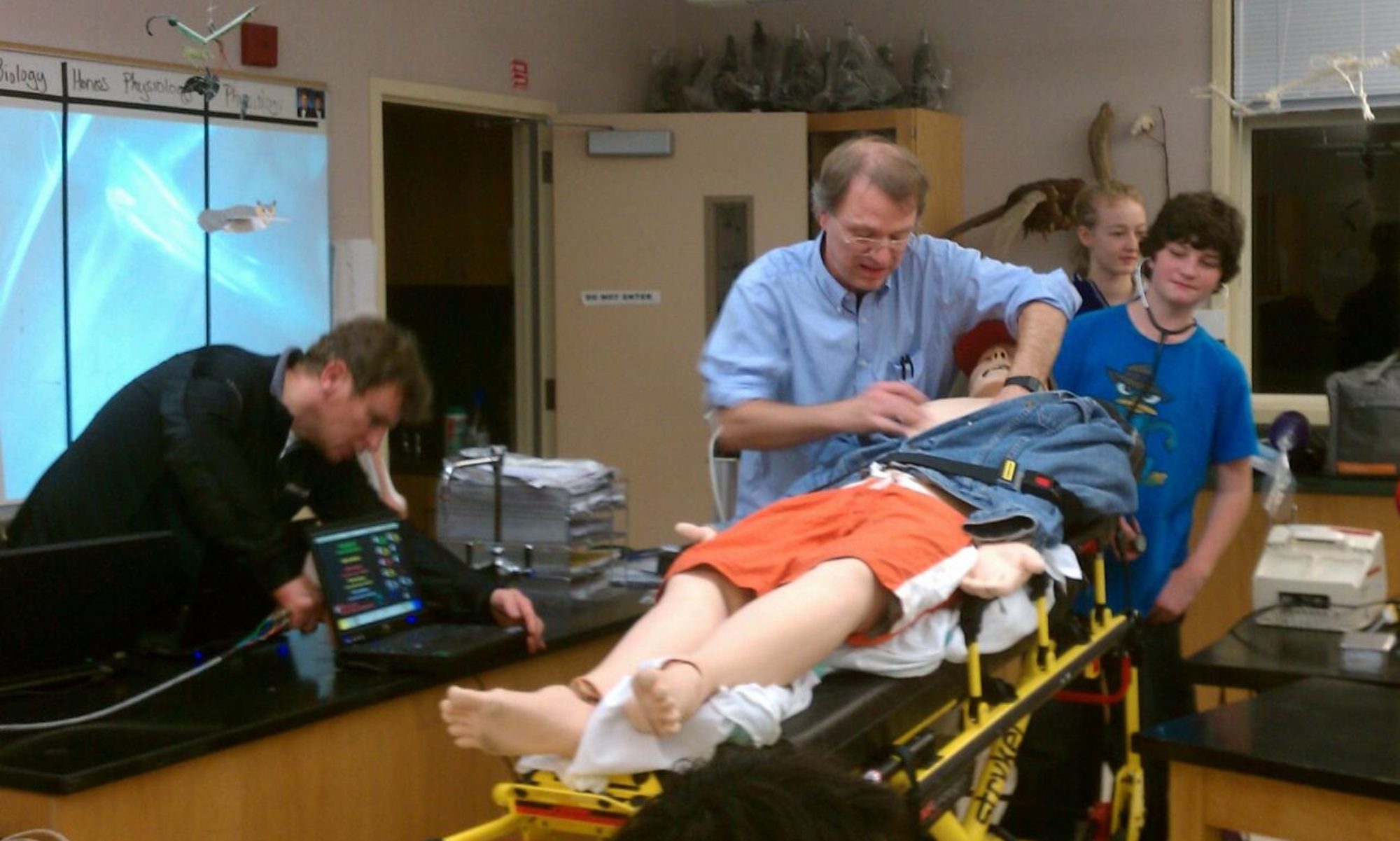
Medical Simulation at Marin Science Seminar

Explore science and technology, meet amazing scientists and medical professionals, gain experience for your resume and college applications, develop a portfolio! Our past interns are now students at or graduates of Cal Poly San Luis Obispo, CalTech, Chico State, Harvard, Humboldt State, MIT, Northwestern, Scripps College, Seattle University, Sonoma State, UC Berkeley, UC Davis, UC Irvine, UC Santa Barbara, and UC Santa Cruz.

Marin Science Seminar interns attend and assist with a minimum of 6 science seminars per academic year (there are 12 per year) during which they meet the speakers and assist with various logistical duties. Sessions take place on Wednesday evenings at Terra Linda High School in San Rafael (320 Nova Albion, Room 207) during the school year. Interns arrive the evening of a session at 7 pm and are free to leave once breakdown is completed (between 8:30 and 9 pm).

Videography interns record sessions, edit and upload session recordings, and create teaser videos for upcoming events. 

Interns may also research and create materials about event topics, create and distribute outreach materials, and engage in social networking and online development of Marin Science Seminar’s mission to attract more students to the fields of science, technology and math. Training is provided for some intern tasks.

Our internships are also offered in conjunction with the Marin County School to Career (StC) Partnership. Students attending a public high school in Marin County may apply for StC credit. Complete and submit a S2C internship application to your school’s School-to-Career representative or visit them for the complete packet. About the Marin County School-to-Career Partnership

Marin Science Seminar Videography internship
Attend and assist at MSS sessions, 6 Wednesday evenings per semester, 7 – 9 pm
At Terra Linda High School, 320 Nova Albion, San Rafael, Room 207
Submit 2 video samples
Able to edit video using video editing software
Facebook account
Recording equipment and SC cards provided

Apply Online Here

Spring ’17 Internship Applications Due 12/31: Science Journalism, Photography & Videography

Marin Teens! (HS and college age) Want a cool spring internship? Check out Marin Science Seminar internships. You can apply online. http://www.marinscienceseminar.com/interns.html

Marin Science Seminar Internships
Spring 2017 Internship dates: Jan. 10 – Apr. 13
Deadline to receive online app: December 31, 2016 
Apply Online

Explore science and technology, meet scientists and medical professionals, gain experience for your resume and college applications, develop a portfolio! 

 
Meet the Marin Science Seminar from Marin Science Seminar on Vimeo.

MSS interns attend and assist with a  6 science seminars per semester, during which they meet the speakers and assist with various logistical duties. Sessions take place on Wednesday evenings at Terra Linda High School, Room 207, during the school year. Interns arrive evening of a session at 7 pm and are free to leave once breakdown is completed (between 8:30 and 9 pm).
Interns also assist in researching and creating materials about event topics, creating and distributing outreach materials, social networking and online development of Marin Science Seminar’s mission to attract more students to the fields of science, technology and math. Other than attending MSS sessions, duties will depend on student interests and background. Training is provided for some intern tasks. 

Below is a comparison of the internships currently being offered. 

Writing or Photojournalism (Photography & Writing) Videography or Film & Photojournalism
Attend and assist at MSS sessions, 6 Wednesday evenings per semester, 7 – 9pm Attend and assist at MSS sessions, 6 Wednesday evenings per semester, 7 – 9pm
At Terra Linda High School, San Rafael, Room 207 At Terra Linda High School, San Rafael, Room 207
Submit 2 writing samples (plus photo samples for Photojournalism) Submit 2 video samples (plus photo samples for Film & Photojournalism)
Familiarity with basic blogging interfaces (e.g. Tumblr, Blogger, WordPress) Able to edit video using video editing software
Facebook and/or Instagram familiarity Facebook and/or Instagram familiarity
Training in blogging software provided Recording equipment and SC cards & reader provided
Questions?  Contact us.